OCCUPY! An Unfinished Uprising
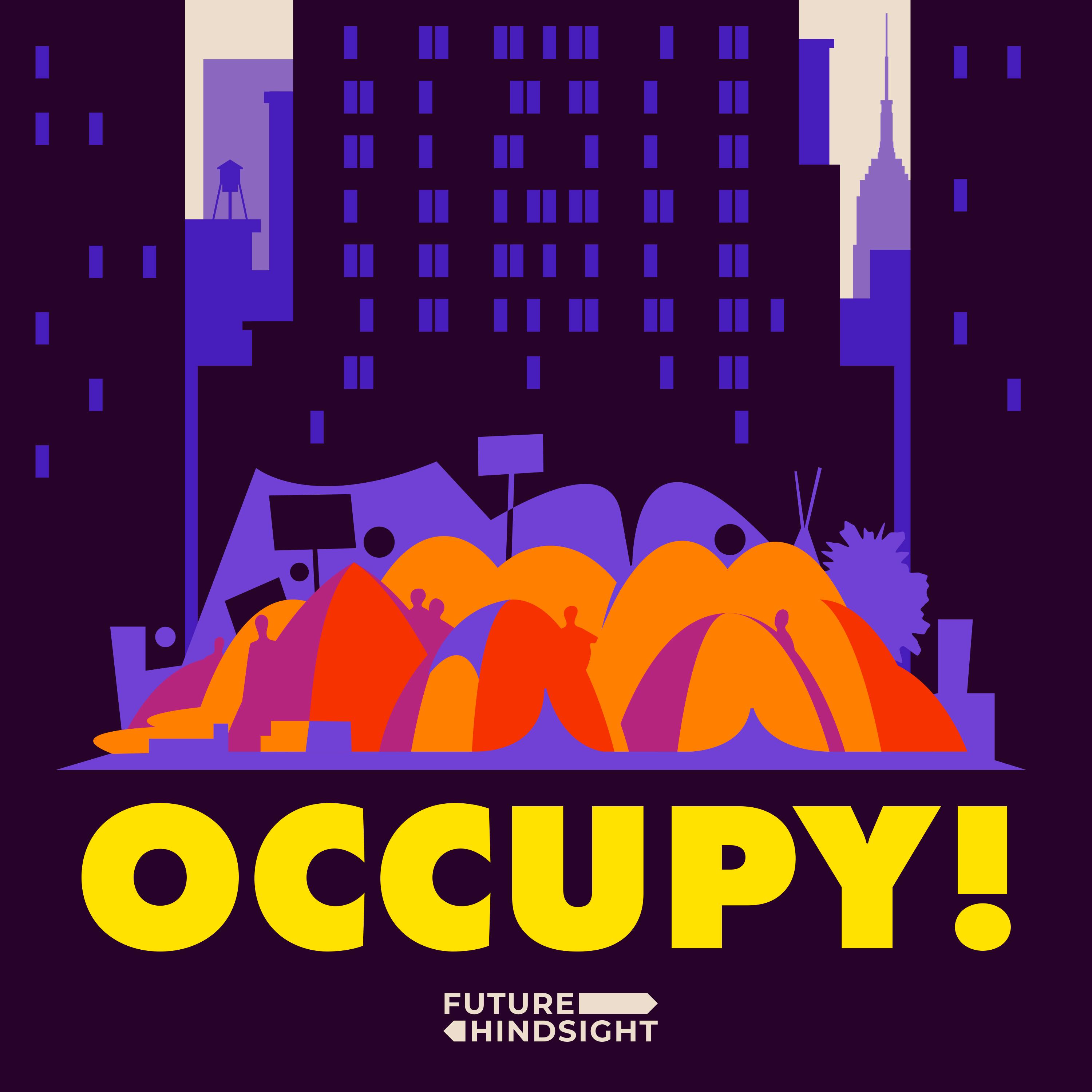
Future HindsightOCCUPY! AN UNFINISHED UPRISING is a six-part narrative series from Future Hindsight exploring how a group of activists camping out in the middle of New York City reshaped the global conversation around capitalism.
On the heels of one of the worst economic crises this nation has ever seen, thousands answered a call to protest Wall Street. They built an anti-capitalist village in a tiny park that inspired hundreds of occupations worldwide. It was the first major American movement of the social media era. As we approach the 15th anniversary of Occupy Wall Street, this series goes inside the movement that grew rapidly, felt both chaotic and transcendent, and then violently flamed out — all from the voices of the activists who lived it.
Mainstream media might have labeled it a failure, but Occupy popularized the language of the "99%," birthed a new generation of organizers, and permanently altered American politics. Discover how an improbable uprising proved that collective action can reshape what is possible.
OCCUPY! AN UNFINISHED UPRISING is a six-part narrative series from Future Hindsight exploring how a group of activists camping out in the middle of New York City reshaped the global conversation around capitalism.
On the heels of one of the worst economic crises this nation has ever seen, thousands answered a call to protest Wall Street. They built an anti-capitalist village in a tiny park that inspired hundreds of occupations worldwide. It was the first major American movement of the social media era. As we approach the 15th anniversary of Occupy Wall Street, this series goes inside the movement that grew rapidly, felt both chaotic and transcendent, and then violently flamed out — all from the voices of the activists who lived it.
Mainstream media might have labeled it a failure, but Occupy popularized the language of the "99%," birthed a new generation of organizers, and permanently altered American politics. Discover how an improbable uprising proved that collective action can reshape what is possible.
Paul Lagunes
Paul Lagunes is a Columbia University political scientist whose scholarship focuses on corruption in the Americas. His current book project is Corruption and Oversight: Insights from Field Experiments. We define corruption, discuss how it relates to democracy, and learn that voting is a tool to fight against it.
Corruption is a contingent behavior In a world of multiple equilibriums, the rules of the game differ from place to place, thus it may be rational to engage in corruption in certain contexts. The same individual will behave one way in one setting and another way in another setting. Corruption involves costs for societies at large. The losers are every day, law-abiding citizens.
The Watchful Eye and the Cracking Whip Both transparency and punishment are essential. We need to make clear and visible that everyone who participates in corruption is punished because revealing corruption without punishment emboldens bad actors. They feel and seem empowered. Government agencies and oversight non-governmental organizations can effectively work together to satisfy both roles.
How citizens can fight corruption We need to be informed, care about curbing corruption, and make our voices heard on the issue. The best way to do so is to vote on Election Day and to use public forums, such as town hall meetings, to confront and engage public officials. Democracy's promise to solve corruption hinges on the premise that officials are the agents, and citizens are the principals.
Find out more:Paul Lagunes is a political science and an Assistant Professor at Columbia University's School of International and Public Affairs. His work has been widely published, and he is currently working on a book titled Corruption and Oversight: Insights from Field Experiments.