Lost Women of Science
Lost Women of ScienceFor every Marie Curie or Rosalind Franklin whose story has been told, hundreds of female scientists remain unknown to the public at large. In this series, we illuminate the lives and work of a diverse array of groundbreaking scientists who, because of time, place and gender, have gone largely unrecognized. Each season we focus on a different scientist, putting her narrative into context, explaining not just the science but also the social and historical conditions in which she lived and worked. We also bring these stories to the present, painting a full picture of how her work endures.
For every Marie Curie or Rosalind Franklin whose story has been told, hundreds of female scientists remain unknown to the public at large. In this series, we illuminate the lives and work of a diverse array of groundbreaking scientists who, because of time, place and gender, have gone largely unrecognized. Each season we focus on a different scientist, putting her narrative into context, explaining not just the science but also the social and historical conditions in which she lived and worked. We also bring these stories to the present, painting a full picture of how her work endures.
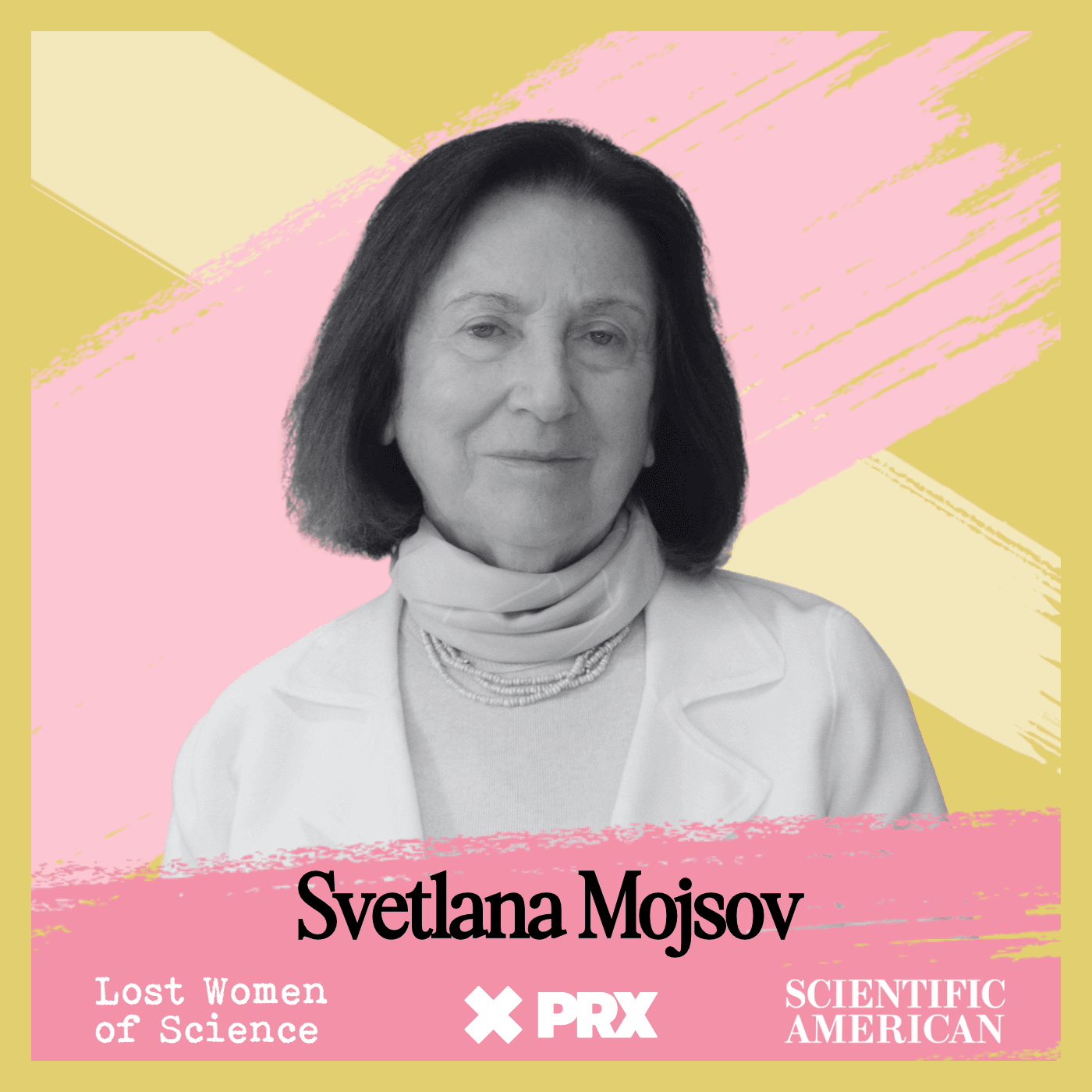






















































































































Svetlana Mojsov: The Woman Behind GLP-1
In 1983, working with pencil and paper at Harvard-affiliated Massachusetts General Hospital, Svetlana Mojsov spotted what everyone else had missed: the active form of a newly discovered hormone called GLP-1. After three years of testing, she proved she was right. That molecule is the basis of blockbuster drugs like Ozempic and Wegovy. Despite her valuable contributions to endocrinology and peptide research, Dr. Mojsov’s name was reduced to a footnote in most of the stories about GLP-1’s discovery. Instead, the credit was given to the men around her. In this episode, we’ll explore how she fought back.
Learn about your ad choices: dovetail.prx.org/ad-choices