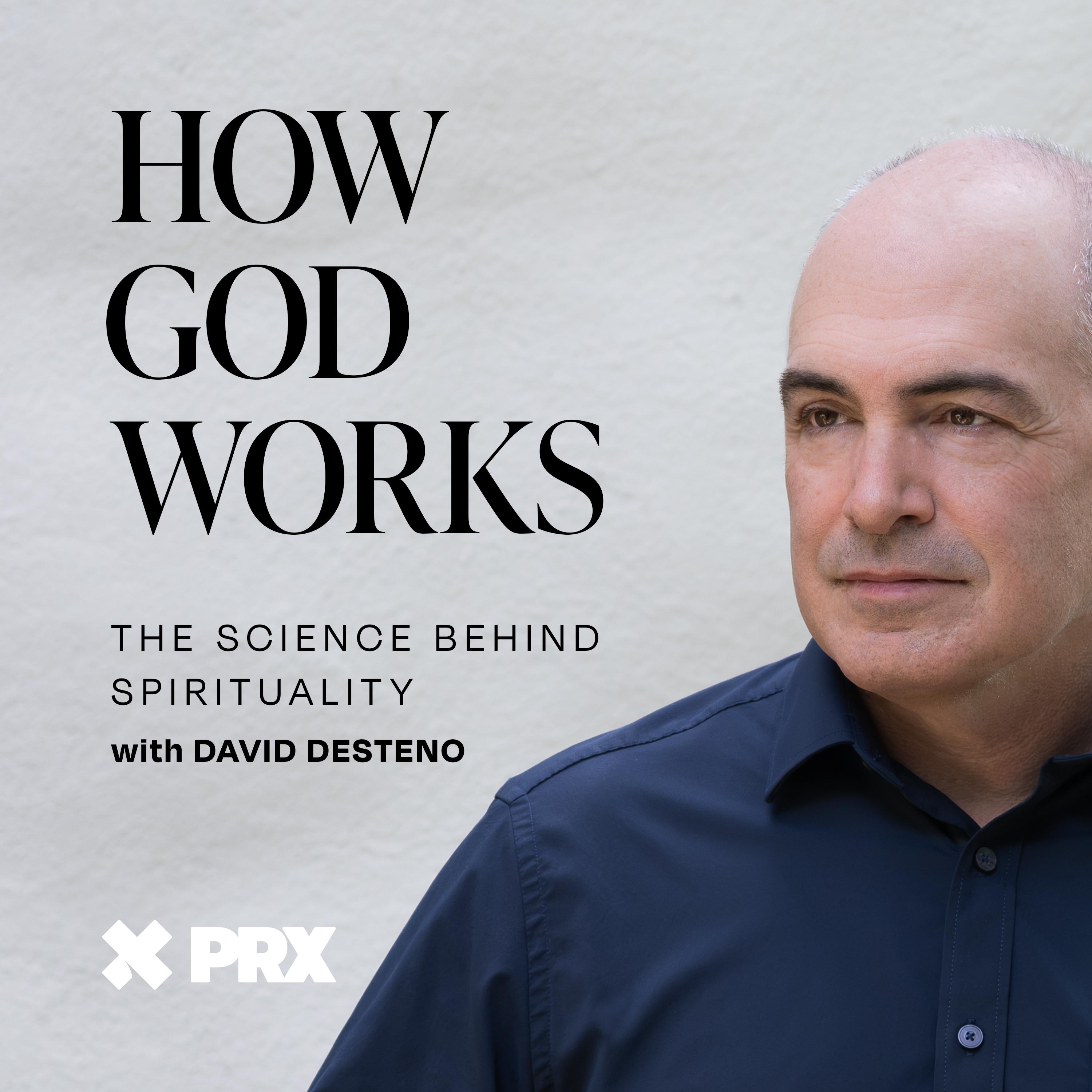
How God Works: The Science Behind Spirituality
PRXWhile religion and science often seem at odds, there’s one thing they can agree on: people who take part in spiritual practices tend to live longer, healthier, and happier lives. The big question is: Why? In How God Works, professor Dave DeSteno takes us on a journey to find out how spirituality impacts our minds and bodies, as well as the world in which we live.
He speaks to leading scientists and philosophers, religious thinkers, and thought leaders to explore what we can learn from the world’s faith traditions to help us meet some of life’s biggest challenges. Along the way, he’ll look at how we can adapt and use spiritual practices in our own lives, whatever our beliefs, including none at all.
It’s by working across the boundaries that usually divide us – science versus religion, one faith versus another – that we’ll find new ways to make life better for everyone.
While religion and science often seem at odds, there’s one thing they can agree on: people who take part in spiritual practices tend to live longer, healthier, and happier lives. The big question is: Why? In How God Works, professor Dave DeSteno takes us on a journey to find out how spirituality impacts our minds and bodies, as well as the world in which we live.
He speaks to leading scientists and philosophers, religious thinkers, and thought leaders to explore what we can learn from the world’s faith traditions to help us meet some of life’s biggest challenges. Along the way, he’ll look at how we can adapt and use spiritual practices in our own lives, whatever our beliefs, including none at all.
It’s by working across the boundaries that usually divide us – science versus religion, one faith versus another – that we’ll find new ways to make life better for everyone.



















Rethinking Sin… Again
We’ve all done things we’re not proud of. But why do some people seem to struggle so much more than others when it comes to avoiding harmful behavior? And what does it mean for how we think about blame and accountability if the answer has something to do with our genes?
On this episode, we’re rethinking sin from the perspective of behavioral genetics. We’ll talk to psychologist Kathryn Paige Harden about the surprising ways ancient religious debates are still shaping modern science, what genetics can actually tell us about why we fall short, and what it all means for how we think about accountability and repair, both for ourselves and as a society.
Kathryn Paige Harden is a Professor of Psychology at the University of Texas at Austin, where she directs the Developmental Behavior Genetics lab and serves as Director of Clinical Training. She is the author of Original Sin: On the Genetics of Vice, the Problem of Blame, and the Future of Forgiveness, and The Genetic Lottery: Why DNA Matters for Social Equality. Learn more about her work on her website.
Also mentioned on this episode:
Elaine Pagels, author of Adam, Eve, and the Serpent
Robert Sapolsky, author of Behave: The Biology of Humans at Our Best and Worst and Determined: A Science of Life Without Free Will
Elizabeth Oldfield, author of Fully Alive: Tending to the Soul in Turbulent Timesand former How God Works guest.