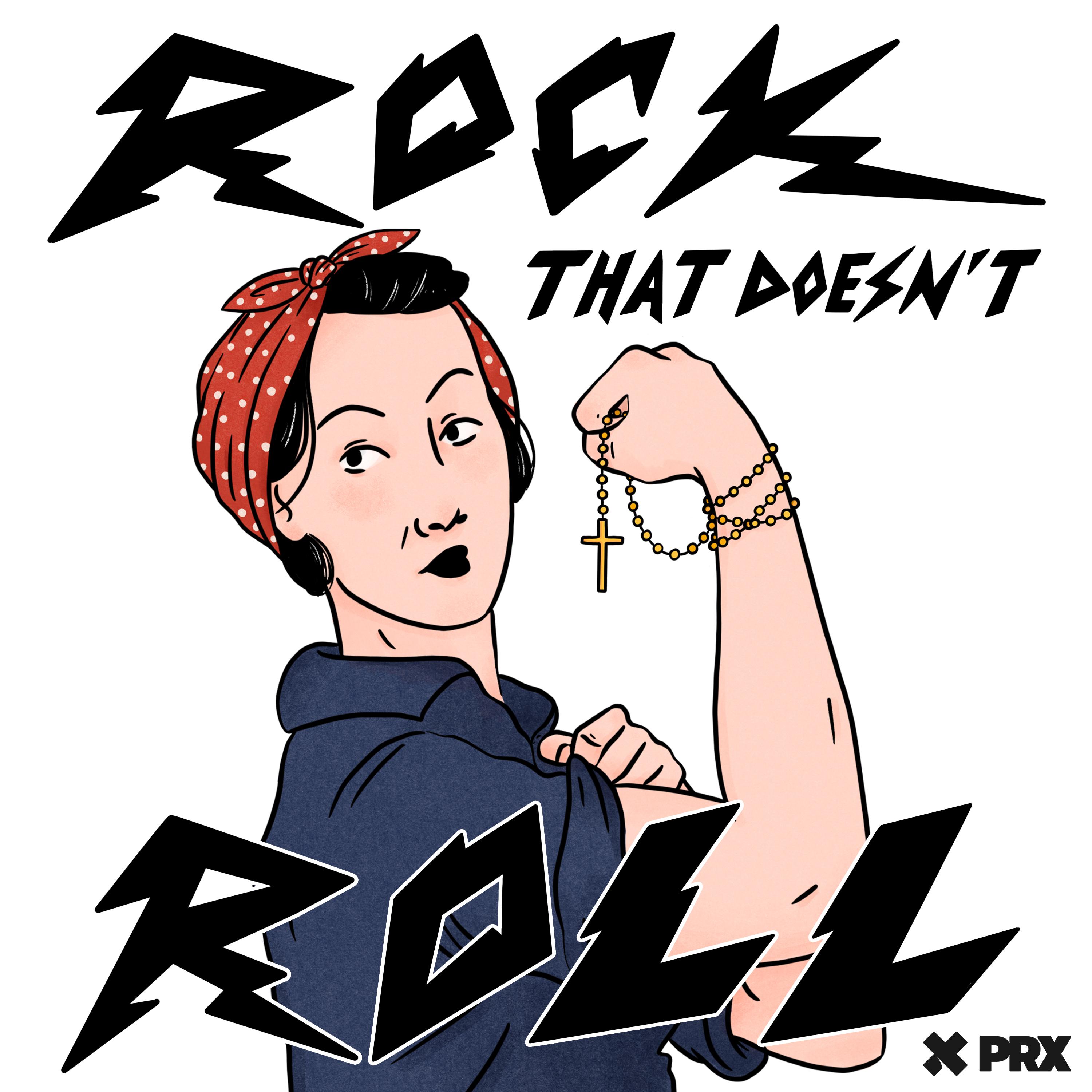
Rock That Doesn't Roll: The Story of Christian Music
Andrew Gill and Leah Payne
Rock That Doesn’t Roll looks at how Christian music shaped the world we're living in now by telling individual stories from the peak era of the contemporary Christian music industry. In the 80s, 90s and early 2000s CCM grew into a billion dollar business that affected millions of evangelical young people. Through interviews with artists, industry players and average fans Dr. Leah Payne and Andrew Gill trace the long-lasting personal, cultural and political impact of sometimes cringe-worthy music. Expect hilarious moments and heartfelt yearning, purity culture and conservative politics- all in equal measure. Whether you’ve deconstructed, come out or renegotiated your faith, we hope you feel seen. If you’ve never given Christian music any thought beyond a punchline, we hope you’ll gain a deeper understanding of a subculture that’s shaping the world around us now.
Rock That Doesn’t Roll looks at how Christian music shaped the world we're living in now by telling individual stories from the peak era of the contemporary Christian music industry. In the 80s, 90s and early 2000s CCM grew into a billion dollar business that affected millions of evangelical young people. Through interviews with artists, industry players and average fans Dr. Leah Payne and Andrew Gill trace the long-lasting personal, cultural and political impact of sometimes cringe-worthy music. Expect hilarious moments and heartfelt yearning, purity culture and conservative politics- all in equal measure. Whether you’ve deconstructed, come out or renegotiated your faith, we hope you feel seen. If you’ve never given Christian music any thought beyond a punchline, we hope you’ll gain a deeper understanding of a subculture that’s shaping the world around us now.
The Second Annual Rock That Doesn't Roll CCM Christmas Song Awards
Introducing: Let The Kids Dance!
Are you a Toby, Michael, or a Kevin?
Purity culture wasn’t just for youth group “purity girls.” “Purity bros” were also a part of the project! No one knows that more than Joshua Harris, a CCM fan who helped turn purity culture into an extreme sport. Together with his friend, Christian music superstar Rebecca St. James, they created media that inspired a generation of evangelicals to say no to sex outside of marriage, but also to things like dating, kissing, holding hands, and a lot of other things. In this episode, journalist and producer Andrew Gill (Sound Opinions), and historian Leah Payne (God Gave Rock and Roll to You: a History of Contemporary Christian Music) follow the story of Josh Harris, one-time icon of purity culture. Josh found that X-games of evangelicalism included the thrill of victory, the agony of defeat, and eventually, a life beyond the world of purity bros and purity girls.
In 2001, teen singing sensation Nikki Leonti was on her way to a promising Christian music career. She had two hit CCM records, and - as a pop princess who swore to refrain from premarital sex - the support of big evangelical media organizations like James Dobson’s Focus on the Family. But then, at age 18, the “purity girl” Leonti announced she was pregnant, and lost it all. With insight from author and podcaster Devi Abraham, journalist and producer Andrew Gill (Sound Opinions), and historian Leah Payne (God Gave Rock and Roll to You: a History of Contemporary Christian Music) explore how Christian music purity icons like Nikki Leonti, along with their fans, walked the tightrope of purity culture, lost their balance, and learned to put their lives back together again after they fell.
In the 1990s, music critics argue that hip hop was in its golden age. Mainstream Top 40 charts were filled with hits from The Notorious B.I.G, Tupac Shakur, and Dr. Dre. But the Contemporary Christian charts lagged far, far behind. What took so long for holy hip hop to take off? With insight from Dr. Jonathan Calvillo (author of In the Time of Sky-Rhyming: How Hip Hop Resonated in Brown Los Angeles), journalist and producer Andrew Gill (Sound Opinions), and historian Leah Payne (God Gave Rock and Roll to You: a History of Contemporary Christian Music) follow the story of Christopher J. Cooper, aka Soup the Chemist, aka Super C, a groundbreaking figure in the Christian hip hop movement. It wasn’t easy, but as Soup the Chemist worked to carve out a place for Christian hip hop to thrive, he laid the foundation for future Christian hip hop figures like Propaganda and Lecrae.
In 1999, singer-songwriter Jennifer Knapp was at the top of the Christian music world. But at the height of her fame, Jennifer moved across the globe, and disappeared from the world of CCM. This episode follows Knapp’s story and shows how, together with her fans, she’s making new meaning out of the Christian music of her past.
In the second season of Rock That Doesn't Roll, hosts Dr. Leah Payne and Andrew Gill look at how Christian music shaped the world we're living in now.
In this bonus episode, Andrew and Leah talk with Lars Gotrich of NPR Music, the producer who brought Amy Grant to play a Tiny Desk Concert. Lars shares how he went from "judgy Christian punk rocker" to someone good at existing in two worlds at once.
A sample episode of No Small Endeavor with Lee C. Camp
In this bonus episode Leah and Andrew interview Jim Cooper, the composer who wrote and recorded the original score for Rock That Doesn't Roll.
‘Tis the season for holiday specials and Andrew Gill (producer, Sound Opinions) and Leah Payne (author, God Gave Rock and Roll to You) of Rock that Doesn’t Roll are bringing you a surprise holiday gift: weirdly specific awards for Contemporary Christian Music Christmas tunes!
For 1990s and early aughts youth group alumni, Christian rock is often the source of embarrassment or shame - but does it have to be that way? The season finale of Rock That Doesn't Roll explores the idea that maybe, just maybe, the key to getting over angst about Christian rock isn't rejecting it or avoiding it, but coming to peace with the person you were when you fell in love with it. With insight from historian Randall J. Stephens (author, The Devil's Music), hosts Andrew Gill (producer, Sound Opinions) and Leah Payne (author, God Gave Rock & Roll to You) follow the story of David Bazan, a Pentecostal pastor's kid-turned-indie rocker who spent decades running from his CCM past. Along the way, Bazan founded Pedro the Lion, and gained critical acclaim, but his fraught relationship with evangelical Christianity and the world of Contemporary Christian Music haunted him. In the end, Bazan suggests that one way to make peace with a CCM past is to learn to be “the billy of your actual hills.”
The late 90s and early aughts were a banner time for a really specific type of rock band - the are-they-or-aren't-they a Christian band, band. This week on Rock that Doesn't Roll: does an artist who identifies as Christian have to brand their music as such? With insight from David Dark, hosts Andrew Gill and Leah Payne follow the story of Jon Foreman, a pastor’s kid from Carlsbad, California whose band Switchfoot created songs that resonated with youth group kids and climbed the Top 40 charts. Were they, or were they not, a Christian band?
For many evangelical teens of the 1990s, record stores were not the place to find kid-tested, parent-approved music. For that, Christian teens usually had to go to Christian bookstores. There, among the Bibles and Precious Moments dolls and Christian-themed t-shirts, they found the records that defined their adolescence. Their guide? Bookstore Guys.
For every 1990s Christian rock star who made it big, there were thousands of never-realized would-be Christian rock dreams. This episode follows two aspiring stars as they wrestle with God and glory and making it in the Christian music biz.
For 1990s evangelical teens, punk, hardcore, and ska were a gateway to a passionate, edgy way to express their Christianity outside the mainstream. But was the music and the message enough to keep the evangelical faith? We follow three Christian punk rock stories.
Christian rock has a lot of naysayers, but for evangelical teens of the 1990s, it was EVERYTHING. And the place to find Christian rock gods? Youth group.
Dive into the world of Christian rock with its biggest fans.